FAST TV, Apps, Ads, Channels, and the New Attention Economy
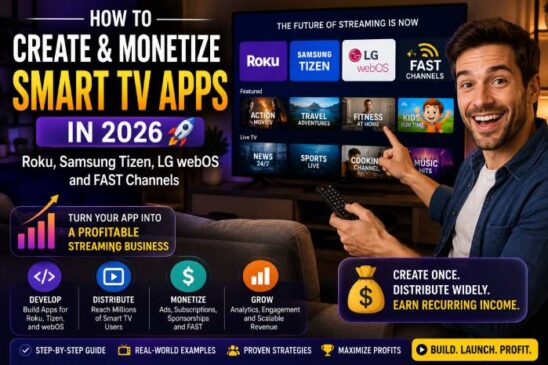
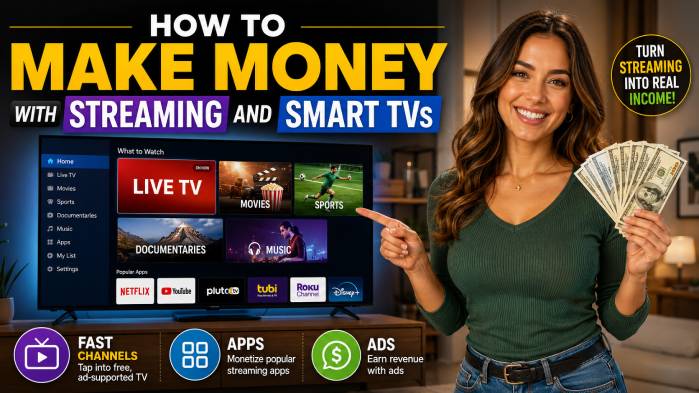
Streaming is no longer just a business for Netflix, Disney, Amazon, or major studios. In 2026, Smart TVs have become one of the most valuable screens in the house, and that creates a real opportunity for creators, local broadcasters, churches, educators, niche communities, sports producers, agencies, and entrepreneurs.
The reason is simple: the television screen has returned to the center of digital attention. People may scroll social media on mobile, but when they want to watch longer content, live programming, educational channels, local events, niche entertainment, or passive “lean-back” video, the Smart TV is one of the most powerful devices available.
This is why the opportunity around FAST TV, Smart TV apps, CTV advertising, and streaming monetization is so important in 2026. The market is moving toward free ad-supported viewing, app-based distribution, connected TV advertising, and niche channels that do not need to compete directly with global streaming giants.
According to IAB, U.S. digital video ad spending is projected to surpass $80 billion in 2026, with connected TV, online video, and social video included in that broader category. That matters because video advertising is one of the strongest monetization engines behind streaming businesses.
The FAST market is also growing quickly. Mordor Intelligence estimates the global free ad-supported streaming TV market at $14.33 billion in 2026, with projections of continued growth through 2031.
For entrepreneurs, this creates a clear question:
How can you make money with streaming and Smart TVs in 2026 without being a giant media company?
The answer is not one single model. The best opportunities usually combine:
- 📡 FAST TV channels
- 📱 Smart TV apps
- 🎥 video-on-demand libraries
- 💰 advertising revenue
- 🧾 subscriptions
- 🤝 sponsorships
- 🧠 niche content strategy
- 🛠 app development services
- 🏢 white-label streaming platforms
- 🔗 affiliate and product monetization
This article explains the real ways to make money with streaming and Smart TVs in 2026, what business models work, what platforms matter, how ads generate revenue, and how to build a practical strategy from zero.
1. Why Smart TV Monetization Is a Real Opportunity in 2026 📈
For years, digital entrepreneurs focused mostly on websites, YouTube, Instagram, mobile apps, and paid traffic. Those channels still matter, but Smart TVs offer something different: a high-attention screen with a more relaxed user experience.
On mobile, users are often distracted. On Smart TVs, users are usually sitting down to watch. That changes the value of the session.
A Smart TV viewer may spend 20, 30, 60, or even 120 minutes watching content. That creates opportunities for:
- longer ad exposure;
- stronger brand recall;
- sponsorship packages;
- serialized content;
- live programming;
- recurring audience behavior;
- premium niche experiences.
Google reported in 2025 that Google TV and Android TV had reached more than 270 million monthly active devices, showing how large the connected TV ecosystem has become.
That does not mean every Smart TV app becomes profitable. It means the distribution environment is now large enough for smaller players to build businesses if they choose the right niche, format, platform, and monetization strategy.
2. What Is FAST TV? 📡
FAST stands for Free Ad-Supported Streaming Television.
In simple terms, FAST TV is a streaming channel that looks and feels like traditional television, but it is delivered over the internet and monetized with advertising.
The viewer does not pay a monthly subscription. Instead, the channel earns money from ads.
Examples of FAST-style experiences include:
- 24/7 linear streaming channels;
- niche movie channels;
- cooking channels;
- fitness channels;
- local news channels;
- religious channels;
- music channels;
- sports replay channels;
- kids’ educational channels;
- documentary channels;
- lifestyle channels.
The key idea is that FAST brings back the simplicity of television:
Open the app, choose a channel, and watch.
No complicated decision-making. No endless searching. No subscription fatigue.
That simplicity is one of the reasons FAST TV is attractive. Viewers increasingly want free entertainment, and advertisers want access to TV-like inventory with digital targeting and measurement.
3. FAST TV vs AVOD vs SVOD vs TVOD 💡
To make money with streaming, you need to understand the main monetization models.
FAST TV
FAST is linear, free, and ad-supported. It feels like traditional TV.
Example:
A 24/7 channel about travel documentaries with ads every few minutes.
AVOD
AVOD means Advertising-Based Video on Demand. The user chooses what to watch, but the content is free and supported by ads.
Example:
A library of cooking videos where users choose episodes and watch pre-roll or mid-roll ads.
SVOD
SVOD means Subscription Video on Demand. The user pays a recurring monthly or annual subscription.
Example:
A fitness streaming app charging $9.99 per month.
TVOD
TVOD means Transactional Video on Demand. The user pays for individual content.
Example:
A user rents a course, event, film, or special episode.
Hybrid Model
The most interesting model for small businesses is often hybrid.
Example:
- free FAST channel for discovery;
- free AVOD videos for audience growth;
- paid subscription for premium content;
- sponsorships for niche shows;
- affiliate products inside the brand ecosystem.
In 2026, the best streaming businesses are not only “video platforms.” They are attention ecosystems.
4. The Main Ways to Make Money with Smart TVs in 2026 💰
There are several ways to monetize Smart TV and streaming projects. The best model depends on your content, audience, budget, and distribution strategy.
4.1 Video Advertising
Advertising is the most obvious model.
You can make money through:
- pre-roll ads;
- mid-roll ads;
- post-roll ads;
- server-side ad insertion;
- programmatic ads;
- direct sponsorships;
- branded content;
- channel takeovers.
On Roku, for example, video advertising commonly involves Roku Advertising Framework, known as RAF. Roku documentation states that apps on the Roku platform must implement Roku’s custom advertising framework to fulfill and render video ads, and apps will not be certified or published until this requirement is met.
That means monetization is not just a business decision. On some platforms, it is also part of the technical and certification process.
4.2 Subscriptions
Subscriptions work best when your content has strong recurring value.
Good examples:
- fitness classes;
- religious teachings;
- premium education;
- exclusive documentaries;
- niche sports;
- children’s learning;
- professional training;
- local community content;
- business education.
Subscription revenue is attractive because it creates predictability. Instead of earning only when an ad is shown, you earn every month from active subscribers.
4.3 Sponsorships
For smaller streaming businesses, sponsorships can be more realistic than programmatic ads in the beginning.
Example:
A local food channel on Smart TVs may not have millions of views yet, but it can sell sponsorship to:
- restaurants;
- supermarkets;
- food delivery businesses;
- kitchen product brands;
- local tourism boards.
A religious channel may sell sponsorship to:
- publishers;
- event organizers;
- music producers;
- educational institutions;
- community businesses.
Sponsorship works especially well when the audience is specific and valuable.
4.4 Paid App Development
You can also make money by building Smart TV apps for other people.
This is a strong opportunity because many creators and businesses have content but do not know how to create apps for:
- Roku;
- Samsung Tizen;
- LG webOS;
- Android TV;
- Google TV;
- Fire TV.
Android TV apps use the same basic Android architecture familiar to Android developers, but they need to be designed for the TV experience, remote control navigation, and Google Play TV quality requirements.
Samsung provides its own Smart TV development environment and documentation for TV web applications, SDK usage, APIs, testing, and deployment.
This means there is room for specialists who understand how to turn content libraries into Smart TV apps.
4.5 White-Label Streaming Platforms
Another business model is to create a reusable streaming platform and sell it as a white-label solution.
Example:
You build one core system with:
- admin panel;
- video categories;
- HLS player;
- Smart TV layouts;
- app templates;
- user login;
- subscription support;
- advertising integration.
Then you sell customized versions to:
- churches;
- creators;
- local TV stations;
- fitness instructors;
- schools;
- coaches;
- events;
- associations;
- niche media brands.
This can be more scalable than building every app from scratch.
4.6 Affiliate Revenue
Smart TV content can also generate affiliate sales.
Example:
A cooking channel can recommend kitchen products.
A travel channel can recommend hotels, tours, luggage, insurance, or travel services.
A tech channel can recommend devices, apps, or software.
A fitness channel can recommend equipment, supplements, workout plans, or digital products.
The important point is that affiliate monetization works best when it is part of the content naturally, not forced.
4.7 Selling Your Own Products
This is one of the most powerful models.
If you own the audience, you can sell:
- courses;
- e‑books;
- memberships;
- merchandise;
- consulting;
- templates;
- apps;
- tickets;
- events;
- private communities.
In this model, the Smart TV app becomes more than a content platform. It becomes a sales channel.
5. The Smart TV Platforms That Matter in 2026 🧩
To make money with Smart TV, you need to understand the major platforms.
Each platform has its own technology, store rules, user base, certification process, and monetization options.
5.1 Roku
Roku is one of the most important platforms for streaming apps, especially in the U.S. market.
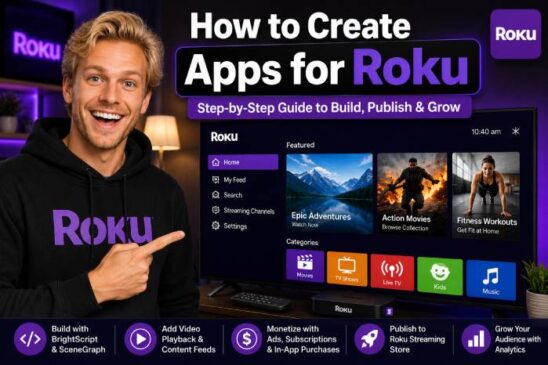
Roku apps are usually built with:
- BrightScript;
- SceneGraph;
- Roku SDK;
- Roku Advertising Framework.
Roku’s advertising documentation explains RAF integration for ad pods, preroll, midroll, and postroll ads.
For entrepreneurs, Roku can be interesting because it is strongly associated with streaming behavior. Users are already looking for video apps and channels.
Best use cases:
- niche streaming channels;
- AVOD libraries;
- FAST-style experiences;
- local content;
- educational video;
- entertainment channels.
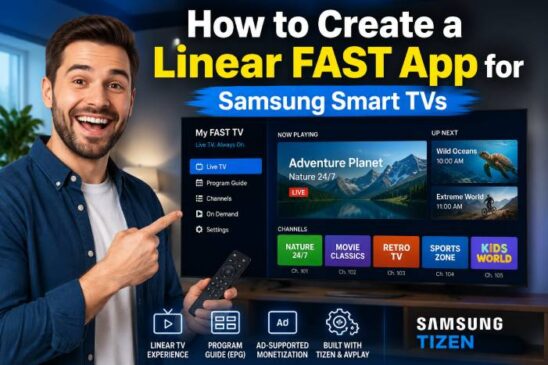
5.2 Samsung Tizen
Samsung Smart TVs run Tizen, and Samsung has a large global TV footprint.
Samsung TV apps are often built with:
- HTML;
- CSS;
- JavaScript;
- Tizen Studio;
- Samsung TV SDK.
Samsung’s developer documentation describes how to get started with Smart TV web applications and how to test apps on TV devices.
Samsung also has advertising-related identifiers such as TIFA, the Tizen Identifier for Advertising, introduced by Samsung Ads for advertising purposes on Samsung Smart TVs.
Best use cases:
- professional streaming apps;
- branded content apps;
- media libraries;
- VOD platforms;
- business and institutional apps.
5.3 LG webOS
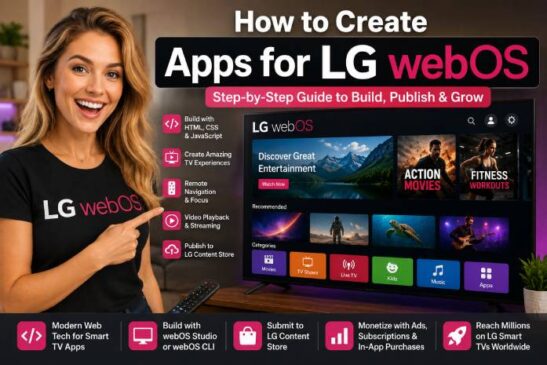
LG webOS is another major Smart TV ecosystem.
LG apps often use web technologies, which can make development more familiar for web developers.
Best use cases:
- video apps;
- educational apps;
- institutional apps;
- niche content libraries;
- branded entertainment.
For monetization, you need to consider app distribution, user experience, player compatibility, and ad support depending on the technical stack used.
5.4 Android TV and Google TV
Android TV and Google TV are important because they connect Smart TVs, streaming devices, and the broader Android ecosystem.
Google’s Android TV documentation explains that developers can build new TV apps or extend existing Android apps to run on TV devices, using familiar Android development architecture.
Google also emphasizes that apps must meet specific requirements to qualify as Android TV apps on Google Play.
Best use cases:
- apps from existing Android businesses;
- subscription video platforms;
- educational apps;
- entertainment apps;
- apps with login and personalization.
6. How Ads Make Money on Smart TV 🎯
Advertising revenue depends on several factors.
The basic formula is:
Revenue = ad impressions ÷ 1,000 × CPM
CPM means cost per thousand impressions.
Example:
If your app serves 100,000 ad impressions and your average CPM is $12:
100,000 ÷ 1,000 × $12 = $1,200 gross ad revenue
But real revenue depends on:
- fill rate;
- country;
- device;
- content niche;
- ad format;
- completion rate;
- user session length;
- direct vs programmatic demand;
- revenue share with platforms or ad networks.
A channel with fewer but highly valuable viewers can sometimes earn more than a generic channel with more impressions but low advertiser demand.
Important Ad Metrics
CPM
How much advertisers pay per 1,000 impressions.
Fill Rate
The percentage of ad requests that actually receive an ad.
Ad Completion Rate
How many users watch the ad until the end.
Session Length
How long users stay in the app.
Watch Time
Total minutes watched.
DAU / MAU
Daily active users and monthly active users.
ARPU
Average revenue per user.
Churn
How many users stop returning.
For Smart TV monetization, watch time is critical. The longer people watch, the more monetization opportunities you have.
7. FAST TV Revenue Example 📊
Imagine you launch a niche FAST channel.
Monthly numbers:
- 50,000 monthly viewers;
- average 30 minutes watched per viewer;
- 2 ad breaks per 30 minutes;
- 4 ads per break;
- 400,000 monthly ad impressions;
- $8 average CPM.
Calculation:
400,000 ÷ 1,000 × $8 = $3,200 gross monthly ad revenue
Now imagine the channel grows:
- 250,000 monthly viewers;
- average 45 minutes watched;
- 3 ad breaks per session;
- 4 ads per break;
- 3,000,000 ad impressions;
- $10 CPM.
Calculation:
3,000,000 ÷ 1,000 × $10 = $30,000 gross monthly ad revenue
These are simplified examples, not guaranteed results. Actual revenue depends on ad fill, geography, platform rules, revenue shares, content quality, rights, and audience retention.
8. The Best Niches for Smart TV Monetization in 2026 🔥
Not every niche works well on Smart TV.
The best niches usually have one or more of these characteristics:
- people watch for long sessions;
- the content can be serialized;
- the audience is clearly defined;
- advertisers can understand the audience;
- content can be produced repeatedly;
- the topic works visually;
- the viewer does not need constant interaction.
Strong Smart TV Niches
🍳 Cooking and Food
Cooking works well because it is visual, repeatable, sponsor-friendly, and perfect for long viewing sessions.
Monetization:
- ads;
- sponsorships;
- recipe books;
- kitchen products;
- affiliate links;
- branded shows.
🙏 Faith and Religious Content
Churches, ministries, religious teachers, and spiritual communities can build powerful streaming channels.
Monetization:
- donations;
- memberships;
- live events;
- sponsorships;
- educational products;
- community subscriptions.
🏋️ Fitness and Wellness
Fitness content is ideal for TV because users often exercise in front of a large screen.
Monetization:
- monthly subscription;
- premium workout plans;
- equipment affiliate links;
- sponsorships;
- paid challenges.
🏡 Home, Lifestyle, and DIY
Home improvement, cleaning, decoration, gardening, and DIY content work well on TV.
Monetization:
- ads;
- brand sponsorships;
- affiliate products;
- digital guides;
- workshops.
🌎 Travel and Local Culture
Travel channels can be built around cities, regions, food, hotels, history, and experiences.
Monetization:
- tourism sponsorships;
- hotel partnerships;
- affiliate bookings;
- ads;
- branded documentaries.
🎓 Education and Professional Training
Educational Smart TV apps can work when the content is designed for passive or semi-passive viewing.
Monetization:
- subscriptions;
- paid courses;
- certificates;
- institutional licensing;
- corporate training.
🐾 Pets and Family Entertainment
Pet content, funny animal videos, calming pet TV, and family-friendly channels can build emotional loyalty.
Monetization:
- ads;
- merchandise;
- digital products;
- sponsorships;
- pet product affiliate sales.
📰 Local News and Community TV
Local news, neighborhood programming, interviews, and regional events can work well because local content is underserved.
Monetization:
- local advertisers;
- sponsorships;
- political ad windows where legally permitted;
- community memberships;
- event coverage.
9. Building a Smart TV App Business 🛠
A profitable Smart TV business needs more than an app.
You need an ecosystem.
At minimum, you need:
- content;
- app;
- backend;
- hosting;
- video delivery;
- analytics;
- monetization;
- marketing;
- retention strategy.
Basic Architecture
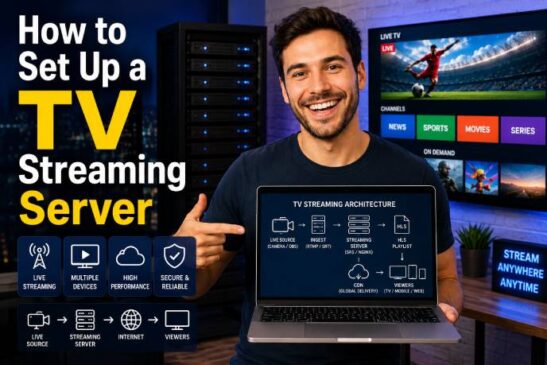
A simple streaming system may include:
- WordPress or custom CMS;
- video storage;
- HLS encoding;
- CDN;
- API;
- Smart TV frontend;
- analytics;
- ad server or ad network integration;
- subscription/payment layer.
Recommended Stack for Beginners
For many entrepreneurs, a practical starting point is:
- WordPress as content CMS;
- custom API endpoint;
- HLS video streams;
- Roku app first;
- Android TV app second;
- Samsung/LG after validation;
- simple analytics dashboard;
- direct sponsorship before complex ad stack.
This lowers the initial cost and lets you validate the business before building a large platform.
10. FAST TV Channel Requirements 📺
To launch a real FAST-style channel, you usually need:
- video library;
- metadata;
- thumbnails;
- channel schedule;
- EPG data;
- playout system;
- stream output;
- ad markers;
- rights clearance;
- distribution partners;
- analytics;
- content operations.
Content Rights Matter
You cannot build a serious streaming business with content you do not have the right to use.
You need one of these:
- original content;
- licensed content;
- public domain content properly verified;
- creator agreements;
- distribution rights;
- revenue-share agreements.
Rights are especially important if you want to distribute through major platforms or ad-supported networks.
11. Smart TV UX: Why TV Apps Are Different 🕹
A Smart TV app is not just a website on a big screen.
TV apps need:
- large text;
- clear focus states;
- remote control navigation;
- simple menus;
- fast loading;
- minimal typing;
- horizontal browsing;
- strong visual hierarchy;
- stable video playback;
- clear back behavior.
Android TV documentation emphasizes that TV apps bring content into the living room and must be built for that environment, not just copied from mobile.
The biggest mistake is treating the TV like a phone.
On mobile, users tap, type, swipe, and scroll.
On TV, users navigate with:
- up;
- down;
- left;
- right;
- OK;
- back;
- play/pause.
A good Smart TV app feels effortless.
12. How to Start with a Small Budget 💼
You do not need to build the perfect streaming empire on day one.
A practical beginner roadmap:
Phase 1: Choose a niche
Pick one audience and one content promise.
Example:
“A free Smart TV channel for people who love simple Brazilian cooking.”
Phase 2: Create or organize content
Start with 20 to 50 videos.
Phase 3: Build a simple VOD app
Begin with on-demand content before a full FAST channel.
Phase 4: Launch on one platform
Roku or Android TV can be a practical first step depending on your market.
Phase 5: Add monetization
Start with sponsorship or simple ads.
Phase 6: Add FAST-style linear programming
Turn your library into scheduled programming.
Phase 7: Expand to more platforms
Add Samsung, LG, Google TV, and other distribution partners.
13. How Much Can You Make? 💵
There is no universal answer.
A streaming business can make:
- $0 if no one watches;
- a few hundred dollars per month with a small audience;
- thousands per month with niche traction;
- tens of thousands per month with scale, ad demand, sponsorships, and distribution;
- much more if it becomes a real media brand.
The better question is:
How much watch time can you generate profitably?
Revenue depends on:
- audience size;
- watch time;
- ad impressions;
- CPM;
- fill rate;
- subscription conversion;
- sponsorship value;
- content cost;
- platform fees;
- development cost;
- marketing cost.
Example: Small Niche AVOD App
- 10,000 monthly users;
- 20 minutes average watch time;
- 2 ad opportunities per session;
- 20,000 ad opportunities;
- 70% fill rate;
- 14,000 filled impressions;
- $10 CPM.
Revenue:
14,000 ÷ 1,000 × $10 = $140/month
That is not exciting yet.
But if the same app has sponsorship:
- local sponsor: $500/month;
- affiliate revenue: $200/month;
- premium guide sales: $300/month.
Now the app generates:
$140 ads + $500 sponsorship + $200 affiliate + $300 products = $1,140/month
This is why small streaming businesses should not depend only on programmatic ads.
14. The Best Monetization Strategy for Small Creators 🧠
For small and medium creators, the strongest model is usually hybrid.
Recommended Hybrid Model
Free content
Use free content to attract users.
Ads
Monetize watch time.
Sponsorship
Sell attention directly to brands.
Paid premium content
Offer deeper value.
Products
Sell your own digital or physical products.
Email or community
Move part of the audience into a direct relationship.
This way, your Smart TV app is not just a video player. It becomes a business asset.
15. Smart TV App Development as a Business 👨💻
Another way to make money is not to own the channel, but to build channels for others.
This can be especially profitable if you already understand:
- Roku development;
- LG webOS;
- Samsung Tizen;
- Android TV;
- HLS streaming;
- APIs;
- WordPress integration;
- ads;
- analytics;
- app store publishing.
You can sell services such as:
- Roku app development;
- Samsung Smart TV app development;
- LG webOS app development;
- Android TV app development;
- streaming CMS setup;
- FAST channel setup;
- video platform consulting;
- app maintenance;
- monetization integration.
Possible clients:
- churches;
- local TV stations;
- online educators;
- influencers;
- niche media brands;
- fitness creators;
- events;
- course creators;
- municipalities;
- regional broadcasters.
This is one of the most practical opportunities for developers in 2026 because many businesses want distribution on TV but do not have the technical team to build it.
16. Smart TV Advertising: Direct vs Programmatic Ads 📣
There are two main ways to sell ads.
Programmatic Advertising
Programmatic ads are sold automatically through ad platforms and exchanges.
Pros:
- easier to scale;
- automated demand;
- works 24/7;
- less manual selling.
Cons:
- revenue can fluctuate;
- fill rate varies;
- CPM varies by country and niche;
- platform rules matter;
- you may need scale to earn meaningful revenue.
Direct Advertising
Direct ads are sold manually to sponsors.
Pros:
- higher control;
- better for local niches;
- easier with small audiences;
- can bundle ads with social media, website, newsletter, and events.
Cons:
- requires sales effort;
- requires sponsor relationships;
- contracts and deliverables need management.
For beginners, direct sponsorship may be more realistic than waiting for programmatic ads to become meaningful.
17. The Role of AI in Streaming Monetization 🤖
AI can reduce the cost of running a streaming business.
You can use AI for:
- content research;
- script writing;
- title optimization;
- thumbnail ideas;
- metadata generation;
- episode descriptions;
- SEO articles;
- ad copy;
- content categorization;
- translation;
- dubbing support;
- programming schedule ideas;
- audience analysis;
- sponsor proposals.
But AI does not replace strategy.
The winners will be those who combine:
- niche knowledge;
- original content;
- distribution;
- technology;
- monetization;
- consistency.
AI helps you move faster. It does not automatically create an audience.
18. SEO Strategy for Streaming and Smart TV Businesses 🔎
If you want to make money with Smart TV apps, SEO can be a major advantage.
Most streaming entrepreneurs ignore Google search.
That creates an opportunity.
You can create articles targeting:
- “how to watch [niche] on Smart TV”;
- “best [niche] streaming app”;
- “free [topic] channel”;
- “how to create a Roku channel”;
- “how to monetize streaming content”;
- “FAST TV channel for [niche]”;
- “Smart TV app development company”;
- “Samsung TV app development”;
- “LG webOS app development”;
- “Android TV app development.”
Your blog can generate leads for:
- app development;
- consulting;
- sponsorships;
- streaming services;
- your own apps;
- digital products.
A Smart TV business should not depend only on app store discovery. It should also build search visibility.
19. Common Mistakes to Avoid ⚠️
Mistake 1: Building the app before validating the audience
Do not spend heavily on development before knowing who will watch.
Mistake 2: Depending only on ads
Small audiences often need sponsorships, products, or subscriptions.
Mistake 3: Ignoring content rights
Rights problems can destroy a streaming business.
Mistake 4: Copying mobile UX
TV users need a different interface.
Mistake 5: Launching on too many platforms too early
Start with one platform, validate, then expand.
Mistake 6: No analytics
Without analytics, you do not know what content works.
Mistake 7: Weak thumbnails
Smart TV browsing is visual. Thumbnails matter.
Mistake 8: No retention strategy
Getting users is hard. Getting them to return is the business.
20. 90-Day Plan to Start Making Money with Smart TVs 🚀
Days 1–15: Strategy
Choose:
- niche;
- target audience;
- content format;
- monetization model;
- first platform;
- technical stack.
Create your positioning:
“The free Smart TV channel for people who love ______.”
Days 16–30: Content
Prepare:
- 20 to 50 videos;
- thumbnails;
- descriptions;
- categories;
- metadata;
- intro/outro;
- sponsor deck.
Days 31–45: MVP App
Build:
- home screen;
- categories;
- video detail page;
- HLS player;
- basic analytics;
- contact/sponsor page;
- privacy policy.
Days 46–60: Launch
Publish or test:
- Roku app;
- Android TV app;
- web version;
- landing page;
- blog articles;
- social media teasers.
Days 61–75: Monetization
Add:
- ad integration;
- sponsorship offer;
- affiliate links;
- premium product;
- email capture.
Days 76–90: Optimization
Analyze:
- watch time;
- most watched videos;
- drop-off points;
- returning users;
- ad performance;
- sponsor interest;
- search traffic.
Then improve the app and content based on real usage.
21. Best Business Models by Profile 🧭
For Developers
Best model:
- app development services;
- white-label Smart TV platform;
- consulting;
- maintenance contracts.
For Creators
Best model:
- AVOD;
- subscriptions;
- digital products;
- sponsorships.
For Churches and Communities
Best model:
- donations;
- memberships;
- live streaming;
- Smart TV app for sermons/classes;
- event access.
For Local Broadcasters
Best model:
- local ads;
- sponsorship;
- FAST channel;
- regional news app;
- live events.
For Educators
Best model:
- paid courses;
- subscription library;
- institutional licensing;
- free content as lead generation.
For Niche Media Brands
Best model:
- FAST channel;
- sponsorships;
- affiliate;
- premium community;
- merchandise.
22. The Future of Streaming Money in 2026 🌐
The future of streaming is not only about big platforms. It is about fragmented attention.
People do not only want one giant app. They also want niche experiences.
The opportunity is in serving audiences that are too specific for major platforms but valuable enough to monetize.
Examples:
- a local cooking channel;
- a regional tourism channel;
- a faith-based teaching app;
- a pet relaxation channel;
- a Smart TV fitness studio;
- a business education TV app;
- a channel for classic local music;
- a streaming app for independent documentaries.
In 2026, the question is not:
“Can I compete with Netflix?”
The better question is:
“Can I own a specific audience on the biggest screen in the house?”
That is where the money is.
FAQ: Making Money with Streaming and Smart TVs in 2026 ❓
What is the easiest way to make money with Smart TVs?
The easiest way is usually not launching a full FAST channel immediately. A better starting point is a simple Smart TV video app with niche content, sponsorships, and eventually ads.
Can small creators make money with FAST TV?
Yes, but FAST TV usually requires enough content, consistent programming, proper rights, ad strategy, and distribution. Small creators may start with AVOD or sponsorship before building a full FAST channel.
Is Roku a good platform for monetization?
Roku can be a strong platform for streaming apps. Its advertising ecosystem uses Roku Advertising Framework, and Roku documentation states that video ad apps need RAF for fulfillment and rendering.
Can I make money with a Samsung Smart TV app?
Yes. Samsung Tizen apps can be used for streaming, branded content, education, and media distribution. Samsung provides documentation for Smart TV web app development and testing.
Is Android TV easier than Samsung or LG?
For developers who already know Android, Android TV can be more familiar because it uses the Android development architecture. However, TV apps still require specific design and quality requirements for the living room experience.
Do I need thousands of videos to start?
No. You can start with a smaller library if the niche is clear and the content is valuable. For a full FAST channel, however, more content and scheduling depth become important.
What makes more money: ads or subscriptions?
Subscriptions usually create more predictable revenue, but ads are easier for free users. Many streaming businesses use a hybrid model.
How much money can a Smart TV app make?
It depends on audience size, watch time, ad fill, CPM, subscriptions, sponsorships, and content cost. A small app may make little from ads alone, but combining ads with sponsorships and products can improve revenue.
What is the best niche for a Smart TV app?
Strong niches include cooking, fitness, faith, education, pets, local news, travel, lifestyle, music, and regional entertainment.
Is Smart TV app development a good business in 2026?
Yes, especially for developers who can build apps for Roku, Samsung Tizen, LG webOS, Android TV, and streaming platforms. Many content owners want TV distribution but lack technical expertise.
Conclusion 🏁
Making money with streaming and Smart TVs in 2026 is no longer limited to giant media companies.
The opportunity is open to:
- creators;
- developers;
- local broadcasters;
- churches;
- educators;
- agencies;
- niche media brands;
- entrepreneurs.
The best strategy is not to copy Netflix. The best strategy is to build a focused media asset around a specific audience.
Start with one niche. Build a simple app. Publish consistently. Track watch time. Add sponsorships. Add ads. Add products. Expand to more platforms only after validation.
The real money is not just in streaming video.
The real money is in owning attention on the most powerful screen in the house.
Tags
Smart TV monetizationFAST TV 2026How to make money with streamingConnected TV advertisingCTV adsRoku app monetizationSamsung Tizen app developmentLG webOS app developmentAndroid TV app developmentStreaming business modelAVODSVODFAST channelsVideo advertisingSmart TV appsStreaming revenueOTT monetizationDigital video adsStreaming platform businessMake money with Smart TV apps